AI Mode Local Search: Make Your Reviews Recommendation Ready
Google AI Mode is turning reviews into decision data. SMBs need fresher, broader, better answered feedback across local platforms.

AI Mode Local Search: Make Your Reviews Recommendation Ready
Google's AI Mode is no longer a side experiment for local discovery. In May 2025, Google said AI Mode place cards would show ratings, reviews, opening hours, and other local business details for searches about restaurants, salons, stores, and similar businesses. By June 2026, Google reported that AI Overviews had more than 2.5 billion monthly active users, while AI Mode had passed one billion monthly users.
For SMB owners and marketers, the practical change is this: reviews are becoming input data for recommendation engines, not just proof points on a listing page. A customer may ask for the best emergency plumber near them, a family friendly brunch spot, or a med spa with transparent pricing. The answer may blend Maps data, review content, website copy, product availability, and third-party mentions before the customer ever opens your profile.
Maps ranking and AI visibility are splitting
BrightLocal's September 2026 Local AI Visibility Study reviewed 200,085 localized searches across ChatGPT, Google AI Mode, and Google's AI Overviews. The tracked businesses appeared in Google Maps 66 percent of the time, compared with 38 percent in AI Overviews, 33 percent in ChatGPT, and 32 percent in AI Mode.
That gap matters. A business can look strong in Maps and still be absent from an AI answer. BrightLocal also found that AI Mode and AI Overviews shared only 29 percent of businesses, while ChatGPT overlapped with either Google surface only 19 to 20 percent of the time. In plain terms, each AI system may build a different shortlist.
This does not mean local SEO is obsolete. It means the review program has to support more than one surface. Google still says local results are based mainly on relevance, distance, and prominence, and that more reviews and positive ratings can help local ranking. But AI answers appear to pull from a wider set of cues, including the wording inside reviews and the consistency of business information across sources.
Customers are using more review sources before they choose
BrightLocal's Local Consumer Review Survey 2026 found that 97 percent of consumers read reviews for local businesses. It also found that the average consumer uses six different review sites when choosing a business. Google is still the largest source, but its usage in the survey fell from 83 percent in 2025 to 71 percent in 2026. AI tools such as ChatGPT rose from 6 percent to 45 percent and became the third most used source for local recommendations.
That is not a signal to ignore Google. It is a signal to stop treating Google as the whole reputation system.
For a local business, this could mean a prospect sees your Google rating in AI Mode, checks Yelp or Tripadvisor for service details, watches a short TikTok review, then scans your website for proof that the details match. If the business has glowing Google reviews but thin feedback elsewhere, the recommendation can feel less certain.
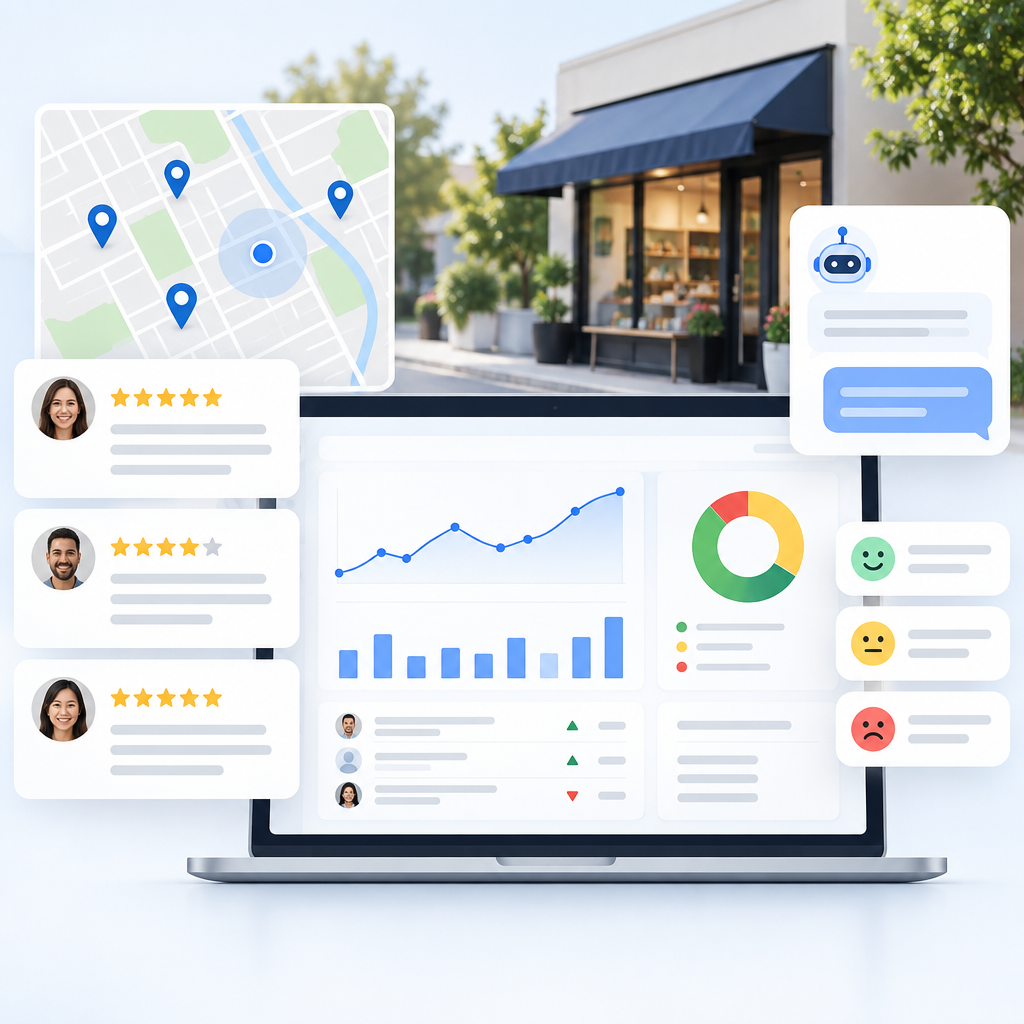
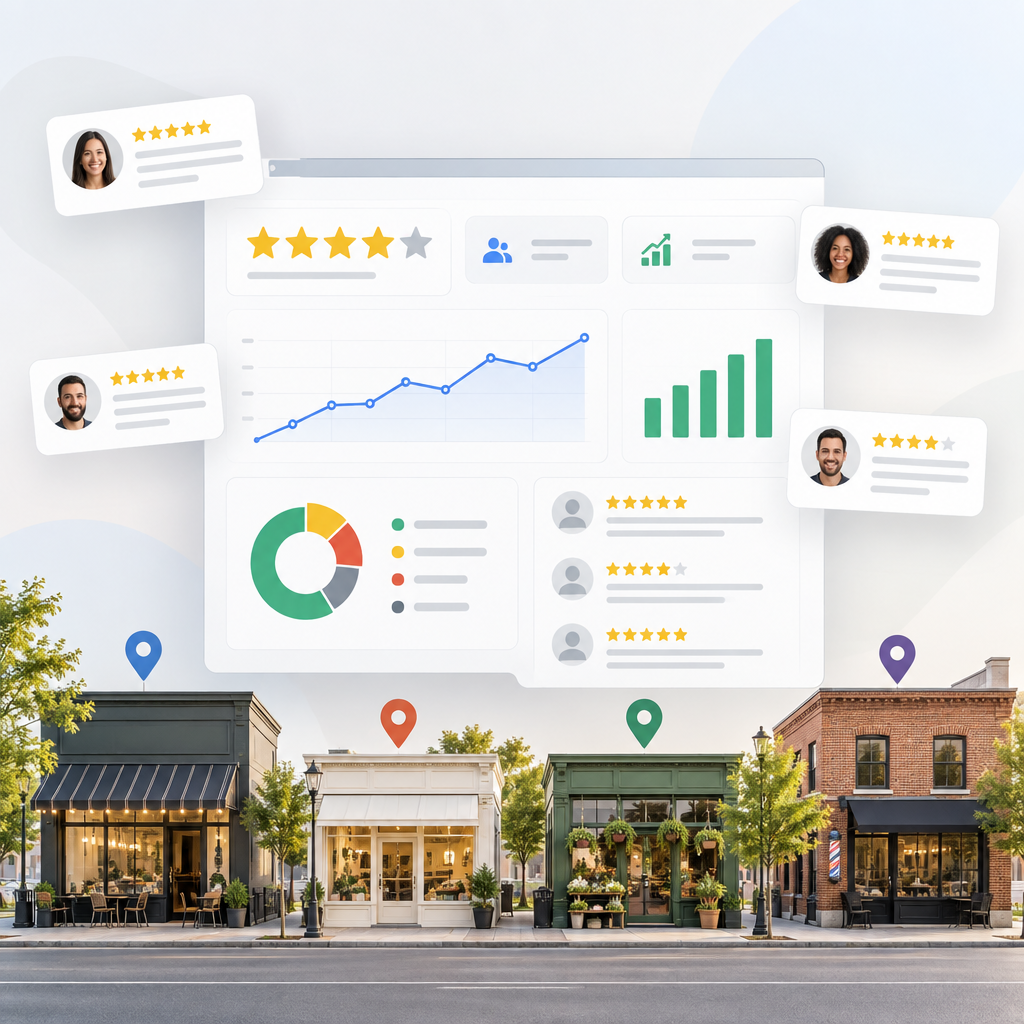
ReviewHive helps here by pulling reviews from multiple platforms into one dashboard, so teams can see where reputation strength is concentrated and where it is thin. A multi-location brand might discover that one branch has strong Google volume but weak Facebook feedback, while another has strong Tripadvisor sentiment but stale Google reviews. That difference is hard to spot when every platform is checked manually.
AI summaries still need human proof
ConsumerAffairs' 2026 review research found that 16.4 percent of shoppers start their buying journey with AI tools, and 87.7 percent have seen AI-generated review summaries. Trust has not caught up. Among people who have seen those summaries, 48.6 percent trust them less than reading human reviews themselves, or not at all. Only 9.3 percent trust AI summaries more.
This is the trust gap SMBs need to plan for. AI may reduce the time it takes to build a shortlist, but customers still want evidence from real people. ConsumerAffairs also found that 80.2 percent of Americans say reviews have influenced them not to buy a product or service, and one-third say few or no reviews are a dealbreaker.
The takeaway is not to flood the web with generic five-star requests. Generic praise gives AI systems and human readers very little to work with. A review that mentions a specific service, staff interaction, wait time, repair outcome, menu item, appointment experience, or follow-up issue is more useful. It helps the next customer answer a concrete question.
What recommendation-ready reviews look like
Start with review freshness. If your most recent detailed review is months old, the business can look quiet even with a good lifetime rating. Ask after normal customer milestones: completed appointments, fulfilled orders, closed support cases, property visits, or post-event follow-ups. Keep requests neutral and simple.
Google's review policies are clear that fake engagement, incentives for reviews, requests to revise or remove negative reviews in exchange for incentives, and selective solicitation of only positive reviews are not allowed. That means the safer operating model is a steady, honest request flow to real customers, not bursts of filtered asks.
Next, watch the language customers use. If people regularly mention emergency availability, pediatric care, vegan options, same-day repair, parking, financing, or staff names, those terms belong in your analysis. They reveal what customers value and what AI systems may later summarize.
Then respond with specifics. Google says replying to reviews shows that a business values feedback and that positive reviews and helpful replies can help a business stand out. A useful reply does not need to be long. It should acknowledge the actual experience, clarify the next step when needed, and avoid sounding pasted across every review.
Finally, compare platforms. A four-location dental group, restaurant group, or home services company should know whether complaints cluster by location, service line, daypart, technician, or platform. ReviewHive's trend analytics can turn those patterns into an operating signal, while AI-assisted replies help teams respond faster without losing the human context customers expect.
A simple review plan for AI local search
Audit the platforms that already show up when you search your brand name, top services, and city. Include Google, Yelp, Facebook, Tripadvisor, Trustpilot, industry directories, and video platforms where relevant.
Create a weekly review rhythm instead of a quarterly push. Small, consistent volume looks more natural, gives customers newer proof, and makes problems visible sooner.
Tag reviews by theme. Use labels such as speed, pricing, cleanliness, staff, availability, product quality, and follow-up. Over time, these themes show which strengths deserve more visibility on your site and which issues need operational attention.
Reply to both praise and criticism. A sharp negative review with no response can travel farther than the original platform, especially when AI tools summarize common themes. A calm, specific response shows future customers how the business handles pressure.
ReviewHive was built for this kind of routine reputation work: one place to aggregate reviews, monitor rating trends, identify recurring themes, and draft fast replies that still sound accountable. If AI search is becoming another front door for local customers, your reviews need to be ready before the question is asked.
Sources
- Google Search: New ways to interact with information in AI Mode
- Google Search: New opportunities, control and insights for website owners
- BrightLocal: Local AI Visibility Study
- BrightLocal: Local Consumer Review Survey 2026
- ConsumerAffairs: The State of Online Reviews 2026
- Google Business Profile Help: Tips to improve your local ranking on Google
- Google Business Profile Help: Prohibited and restricted content