Detailed Reviews Are the New Local SEO Advantage in 2026
Review platforms and customers are rewarding specific, genuine feedback. Here is how SMBs can ask for better reviews without crossing policy lines.
Detailed Reviews Are the New Local SEO Advantage in 2026
Short reviews still count, but they are becoming less useful. In 2026, the stronger reputation signal is a review that sounds like a real customer describing a real visit: what they bought, who helped them, what changed their mind, what went wrong, and whether the business fixed it.
That shift is not just a content preference. Review platforms are getting stricter about authenticity and review quality. Yelp said its 2025 recommendation software was enhanced to avoid recommending reviews that lack sufficient detail about the customer experience or show signs of conflicts of interest. Tripadvisor reported removing 214,000 AI-generated reviews in 2024. Google’s review rules continue to center on one standard: reviews must reflect a genuine experience and cannot be paid, selectively solicited, or manipulated.
For small businesses, this changes the review playbook. The goal is no longer “get more five-star reviews.” The better goal is to build a steady stream of specific, balanced, policy-safe reviews that help customers, search platforms, and AI systems understand what your business is actually good at.
Platforms Are Filtering For Authenticity, Not Just Spam
Yelp’s 2025 Trust and Safety Report is a useful sign of where review moderation is heading. Yelp said about 22 million reviews were contributed in 2025. Around 70% were recommended by its automated software, while 17% were not recommended, 11% were removed by Yelp’s User Operations team, and 2% were self-removed by reviewers. Yelp also said it filtered out nearly half a million reviews that showed characteristics of AI-generated content.
Tripadvisor reported a similar pressure point. In 2024, travelers submitted 31.1 million reviews, and Tripadvisor said it protected users from 2.7 million fraudulent reviews. “Review boosting,” where owners, employees, or affiliated people post positive reviews to improve rankings, made up 54% of fake review submissions.
The practical lesson is simple: generic positivity is getting riskier. “Great service, highly recommend” may be real, but it does not give platforms or future customers much to work with. Worse, if a business trains customers, employees, or contractors to leave similar-sounding praise, those reviews can start to look coordinated.
Ask For Specifics, Not Stars
Google allows businesses to ask customers for reviews using a link or QR code, but it bans incentives, review gating, and selective solicitation. That means you should not ask only happy customers. You also should not offer discounts, free items, loyalty points, or contest entries in exchange for reviews.
A safer, better request sounds like this:
“Thanks for visiting us today. If you have a minute, would you share an honest review about your experience? Details like the service you booked, what helped, and anything we could improve are useful to other customers.”
That wording does three important things. It asks for honesty, invites both positive and negative feedback, and encourages detail without telling the customer what rating to leave.
Local service businesses can go one step further. Google notes that service business reviews may include the specific service selected by the customer. If you are a plumber, med spa, dental office, repair shop, salon, or agency, make sure your Google Business Profile services are accurate. A review tied to “emergency drain cleaning” or “brake replacement” gives future customers more context than a plain five-star rating.
Customers Notice Generic Replies Too
Detailed reviews are only half the job. The response also needs to prove that someone read the review.
BrightLocal’s 2026 Local Consumer Review Survey found that 89% of consumers expect businesses to respond to reviews, 81% expect a response within a week, and 19% expect a same-day response. The same survey found that 80% of consumers are likely to use a business that responds to every review, while generic or templated replies make 50% of consumers unlikely to choose a business.
Google’s own review reply guidance points in the same direction. It recommends short, relevant, conversational responses that acknowledge specific feedback, rather than repeating the same thank-you message.
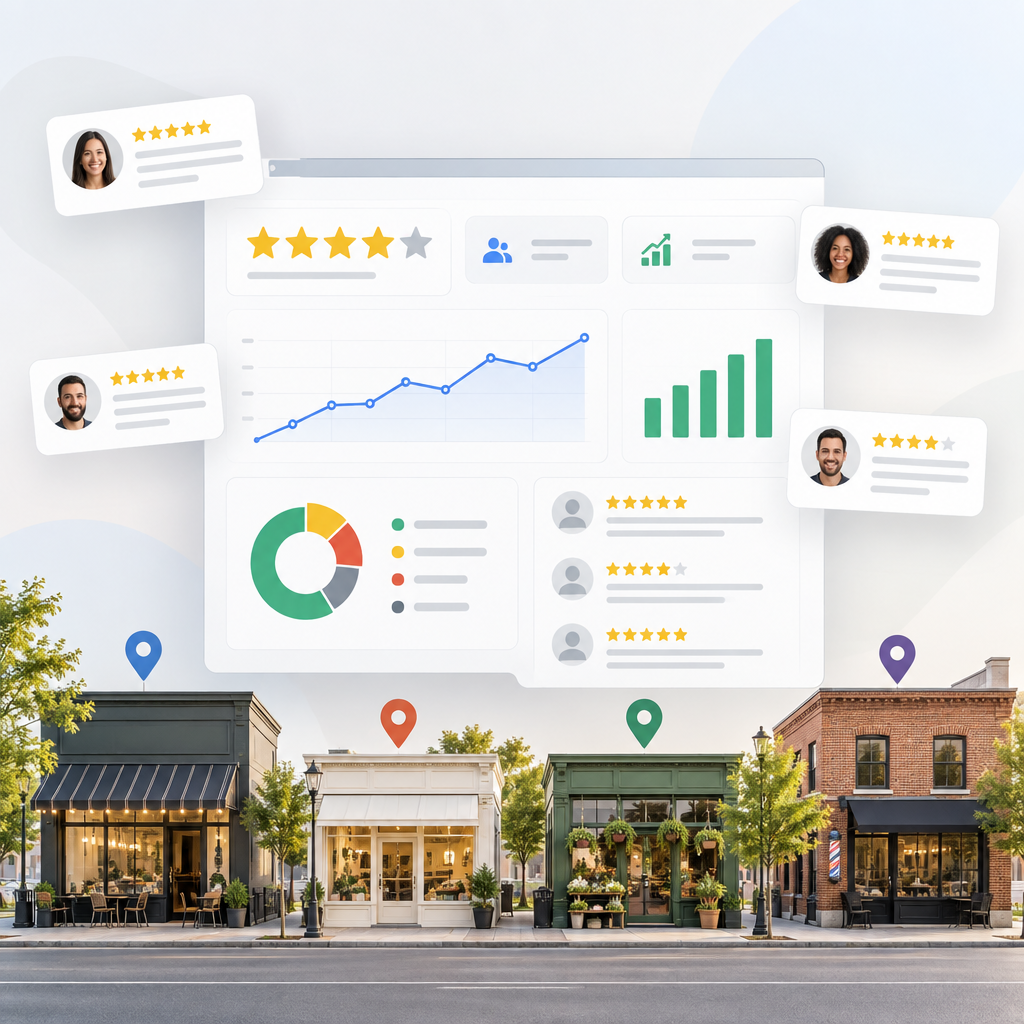
That does not mean every owner needs to hand-write every reply from scratch. ReviewHive can aggregate reviews from Google, Yelp, Facebook, Tripadvisor, and other platforms into one dashboard, flag recurring themes, and draft AI-assisted replies that your team can quickly personalize. The important part is the final edit: mention the customer’s specific issue, product, staff member, or visit type when it is appropriate and privacy-safe.
Use Review Themes To Improve The Business
The hidden value in detailed reviews is operational. If ten customers mention slow check-in, confusing estimates, weak parking instructions, or a standout employee, that is not just reputation content. It is business intelligence.
Bazaarvoice’s 2025 Shopper Preference Report, based on more than 8,000 consumers across six countries, found that 52% of shoppers cite real customer reviews as the biggest factor in final purchase decisions. It also found that consumers are wary of overly positive, generic reviews. While that research is broader than local search, it matches what SMBs see every day: buyers want real-world proof, not polished claims.
A practical monthly review audit should answer five questions:
- Which services or products are customers naming most often?
- Which words keep appearing in five-star reviews?
- Which complaints repeat across platforms?
- Which locations or staff teams are earning the strongest feedback?
- Which reviews deserve a public reply, a private follow-up, or a process fix?
This is where review analytics matter. A single negative review can feel urgent, but a trend is more useful. ReviewHive’s rating trend and sentiment analytics help businesses separate a one-off complaint from a recurring issue worth fixing.
A Better Review Request Workflow For 2026
Start with timing. Ask shortly after the service is completed, when the details are still fresh. Use the platform’s approved link or QR code, and send the same opportunity to customers regardless of sentiment.
Next, prompt for helpful detail without steering the rating. Instead of “Please leave us a five-star review,” ask customers to mention what they came in for, what stood out, and what could have been better.
Then monitor every major platform, not only Google. Google says Business Profiles may show trusted third-party reviews from travel or local review sites, so an ignored Yelp, Tripadvisor, Facebook, or Trustpilot profile can still shape how customers judge you.
Finally, respond fast and specifically. Thank happy customers without sounding pasted in. For critical reviews, acknowledge the issue, explain what you can, protect privacy, and move sensitive details to phone or email.
Detailed reviews are harder to fake, easier to trust, and more useful for both search visibility and customer decisions. If your review program is still chasing volume alone, 2026 is the year to shift toward quality, specificity, and response discipline.
ReviewHive helps local teams keep that system manageable: one dashboard for review monitoring, analytics to spot reputation trends, and AI-assisted replies that help you respond faster without sounding generic.
Sources
- BrightLocal: Local Consumer Review Survey 2026
- Yelp: Yelp Releases 2025 Trust & Safety Report
- Tripadvisor: Tripadvisor's 2025 Transparency Report reveals strong review submissions and improved fraud detection
- Google Business Profile Help: Prohibited and restricted content
- Google Business Profile Help: Tips to get more reviews
- Bazaarvoice: Shopper Preference Report 2025