AI Review Summaries and Local SEO: What SMBs Should Do in 2026
AI review summaries are reshaping local search. Learn how SMBs can earn clearer, more useful review themes without policy risk.

AI Review Summaries Are Becoming a Local SEO Surface
For years, local SEO teams treated reviews as a rating-and-volume game: earn more positive reviews, respond quickly, and keep your Google Business Profile fresh. Those basics still matter, but a newer layer is changing how customers interpret reputation before they ever open the full review list: AI-generated review summaries.
Google now uses AI to summarize patterns in local reviews, and Google’s own documentation says these summaries can be based on reviews from the past year and updated regularly as new feedback comes in. Google Maps Platform has also made AI-powered place and review summaries generally available for developers in supported regions, signaling that summarized review sentiment is moving from experiment to infrastructure.
For SMB owners and marketers, the practical takeaway is simple: individual reviews still matter, but recurring review themes now matter even more.
Why Review Themes Matter More Than Ever
A customer comparing three dentists, restaurants, salons, contractors, or clinics may not read 40 reviews. They may scan a summary that says patients mention friendly staff, long wait times, easy parking, rushed service, or transparent pricing. That summary can shape the customer’s first impression before your latest five-star review gets any attention.
This does not mean businesses should try to manipulate what customers say. In fact, that is exactly the wrong move. Google’s policies prohibit fake engagement, incentives for reviews, and selective solicitation. The FTC’s Consumer Reviews and Testimonials Rule, which went into effect on October 21, 2024, also gives regulators a clearer path to penalties for knowing violations involving fake or deceptive reviews.
The better strategy is to improve the real customer experience, then make it easy for real customers to describe it clearly.
Audit the Phrases Customers Already Use
Start by looking beyond star ratings. Export or review your last 6 to 12 months of customer feedback across Google, Yelp, Facebook, TripAdvisor, industry platforms, and first-party surveys. Group the comments by repeated themes:
- Service speed
- Staff professionalism
- Pricing clarity
- Cleanliness
- Appointment availability
- Product quality
- Communication
- Problem resolution
- Location convenience
Then separate each theme into positive, neutral, and negative mentions. A 4.7 average rating can hide a growing complaint about phone responsiveness. A 4.2 rating can include strong positive themes that deserve to be reinforced in operations and marketing.
The goal is not to write review keywords for customers. The goal is to understand what customers naturally notice and whether those patterns support the reputation you want local searchers to see.
Ask for Reviews Without Steering Sentiment
Review requests should be consistent, neutral, and policy-safe. Google says merchants may ask for content that reflects a genuine experience, but may not offer incentives, discourage negative reviews, or selectively ask only happy customers.
That makes review gating especially risky. If your workflow asks customers whether they had a good experience and only sends the review link to positive responders, you are biasing the sample. Even if the intent is service recovery, the result can distort public feedback.
A safer request sounds like this: Thank you for choosing us. If you have a minute, please share honest feedback about your experience. Your review helps customers understand what to expect and helps our team improve.
Send that request to a broad, legitimate customer group. Do not condition it on a discount, loyalty perk, refund, upgrade, or preferred outcome.
Turn Negative Themes Into Operational Fixes
AI summaries are only as good as the review corpus underneath them. If customers repeatedly mention slow callbacks, confusing estimates, missed arrival windows, or inconsistent service, those patterns can surface publicly.
Treat negative review themes as an operations dashboard, not just a marketing problem. Assign owners to the top recurring issues. Track whether the theme decreases over time. Update customer-facing processes where the root cause is preventable.
For example, a home services company seeing repeated complaints about arrival windows might add automated technician ETA texts. A med spa seeing confusion about pricing might revise consultation scripts and pre-visit emails. A restaurant seeing praise for staff but complaints about pickup delays might separate dine-in and takeout workflows during peak hours.
Reputation improves fastest when the business fixes the experience customers keep describing.
Reply in a Way That Reinforces Trust
Responses still matter because they show future customers how the business handles praise, criticism, and mistakes. They also create a public record of accountability.
Strong replies are specific without exposing private customer details. They acknowledge the issue, explain the next step when appropriate, and avoid defensive language. A good negative-review reply should make a future customer think: this business is paying attention, and I would be comfortable if something went wrong.
For positive reviews, avoid generic repetition. If a customer praises a specific staff member, service, or outcome, acknowledge it naturally. Over time, thoughtful replies reinforce the same real-world themes that reviews already contain.
Watch for Review Integrity Risks
Google has said it uses AI and human review to detect suspicious edits, fake reviews, and abuse patterns, including fake five-star activity. In 2024, Google reported blocking or removing more than 240 million policy-violating reviews. Businesses should assume review integrity enforcement will keep getting more automated and more sophisticated.
That means marketers should audit vendors, agencies, franchisees, and frontline staff. Ban purchased reviews, employee reviews that do not disclose conflicts, review swaps, incentive campaigns, and scripts that pressure customers to revise negative feedback. Document your process so you can show that your review generation program is neutral and experience-based.
What to Track Monthly
A practical monthly review report should include more than average rating. Track total review volume by platform, rating trend, response time, unanswered reviews, top positive themes, top negative themes, and emerging changes from the past 30 to 90 days.
Also track whether specific operational fixes are changing the language customers use. If you improved appointment reminders, are fewer customers mentioning missed calls? If you trained staff on estimates, are more customers mentioning transparent pricing?
This is where review management becomes a growth function, not just damage control.
The Bottom Line
AI review summaries make reputation more compressed, more visible, and harder to manage with surface-level tactics. SMBs should focus on authentic review collection, theme-level analytics, fast responses, and operational follow-through.
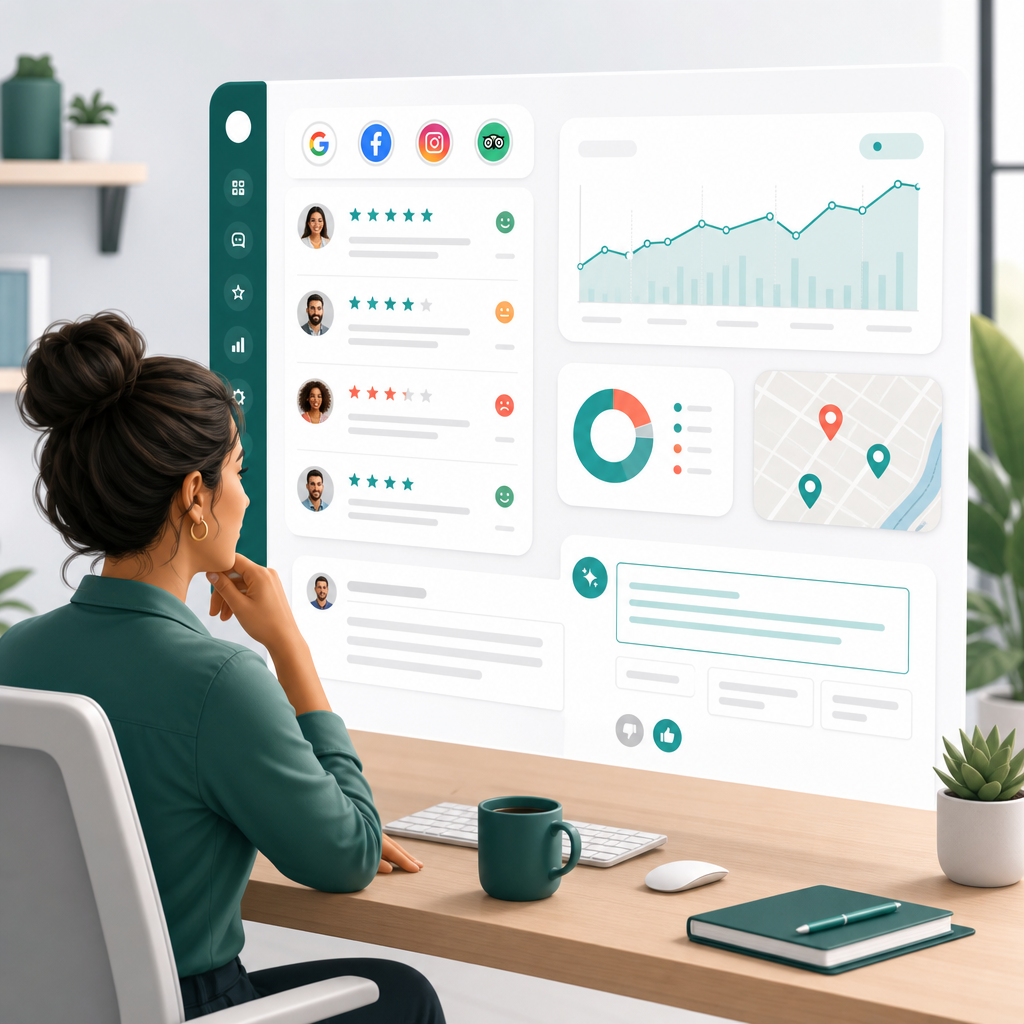
ReviewHive helps businesses bring reviews from multiple platforms into one dashboard, track rating and sentiment trends, and draft AI-assisted replies that stay practical and on-brand. If AI summaries are shaping how customers see your business, the best response is to understand the patterns first and improve them deliberately.