AI Search and Google Maps: How SMBs Should Manage Reviews in 2026
AI search is turning reviews into instant local answers. Here is how SMBs can protect reputation, accuracy, and response quality.
AI Search Is Turning Reviews Into Local Answers
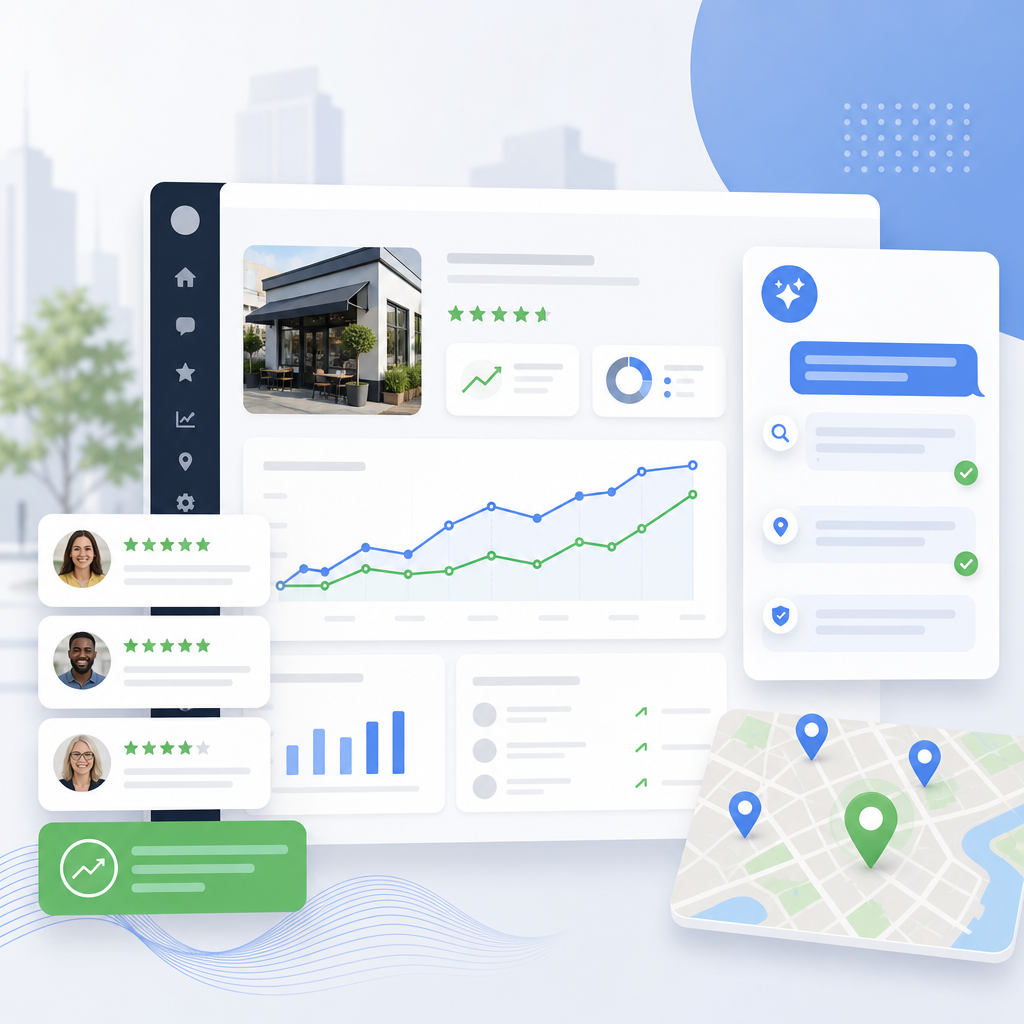
Google Search and Google Maps are moving more local discovery into AI-generated answers. That matters for small businesses because customers may not read ten reviews before deciding. They may ask a tool for the best salon near them, the quietest restaurant for a date, or a contractor with fair pricing, then get a compact answer shaped by review text, profile data, third-party mentions, and recent customer signals.
This does not make reviews less important. It makes them more compressed. A pattern that used to sit buried on page three of reviews can now become a sentence in an AI summary. A missing service detail can become an opportunity for the system to infer. A stale complaint, if it appears across several sources, can travel farther than the original review ever did.
Why This Is Timely Now
Google said in May 2025 that AI Mode was rolling out in the U.S. without a Labs sign-up, using query fan-out to break questions into subtopics and search across the web. Google also reported that AI Overviews drove more than a 10% increase in usage for query types where AI Overviews appeared in major markets including the U.S. and India.
Maps is moving in the same direction. On August 6, 2026, Google announced new Ask Maps capabilities for food ordering, hotel discovery, local events, personalized recommendations, and conversational contributions. Google said Ask Maps can use local context such as saved places, dietary needs, route information, Gmail-connected plans when enabled, and updates from contributors.
For SMBs, the practical shift is simple: customers are asking more specific questions, and platforms are answering with synthesized local information. Reviews are no longer only persuasion assets. They are source material.
Review Detail Beats Review Volume Alone
BrightLocal's 2025 Local Consumer Review Survey found that 27% of consumers use only one website for reading reviews before choosing a local business, while 40% use two sites on average. Overall, 74% use two or more review sources. That supports a common local SEO reality: Google may be the front door, but Yelp, TripAdvisor, BBB, vertical directories, and niche platforms can still shape trust.
The same survey found that consumers are paying attention to detail. BrightLocal reported increases in consumers saying photos or videos with reviews, up 3%, and long detailed reviews, up 7%, would make them feel positive about choosing a local business. It also found that 92% of consumers find Google review keyword filters and photos useful in some way.
That is a useful prompt for review requests. Instead of asking every customer for a generic star rating, ask for honest specifics: the service they booked, the location they visited, the team member who helped, the result they got, and any practical detail future customers would care about. Do not script the review. Do not offer incentives. Do make it easy for customers to describe the real experience.
Accuracy Across Platforms Is Now Reputation Work
Google's Business Profile documentation says Search and Maps can show review scores, top reviews, and total review counts. It also says some Business Profiles may show reviews from other local review sites based on information Google gathers from the web. That means a neglected third-party profile can still influence how customers understand your business.
Google's policy documentation also says Business Profile content must accurately represent the location, and that policy violations can cause content rejection, profile restrictions, or account restrictions. The basics still matter: correct categories, hours, address, service areas, business name, website, phone number, and photos.
AI search adds one more reason to keep those facts consistent. Business Insider reported in August 2026 on small businesses whose Google AI summaries appeared to mix them up with competitors, old locations, or similarly named companies. The lesson is not that every business will face the same problem. It is that AI systems can amplify confusion when the public web gives them messy inputs.
A quarterly accuracy audit is no longer enough for competitive local categories. Check your Google Business Profile, Apple Maps, Yelp, TripAdvisor or industry sites, your website location pages, major directories, and social profiles. Look for name variations, outdated locations, mismatched services, old phone numbers, and repeated complaints that no one has answered.
Response Quality Is Becoming A Public Signal
BrightLocal found that only 7% of consumers do not expect review responses. It also found that 63% expect a business response somewhere between two to three days and one week. That gives SMBs a realistic benchmark: speed matters, but so does substance.
Responding to every review with the same template is risky. It tells customers that nobody read the review. It also adds thin, repetitive text to the public record. Better responses acknowledge the specific experience, clarify facts where needed, explain the next step, and stay calm when the review is unfair.
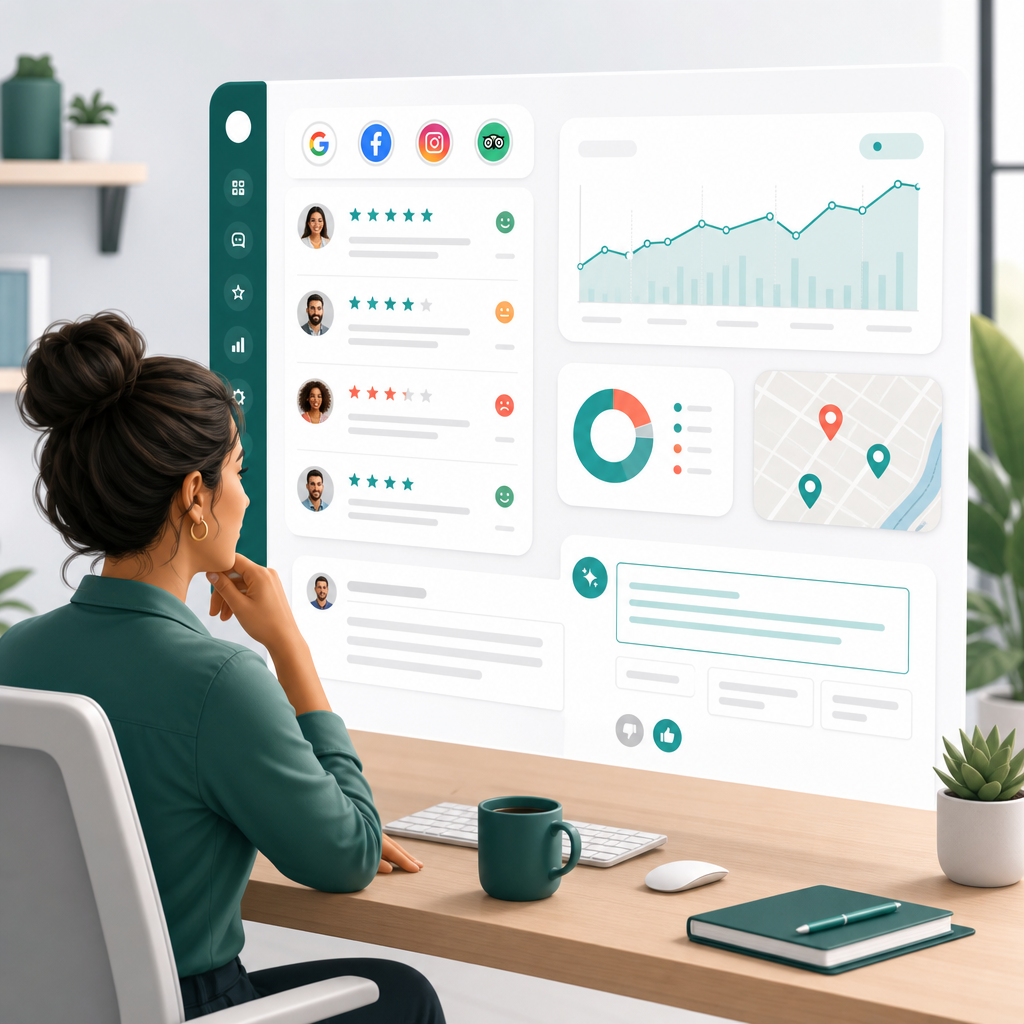
AI can help here when it is treated as a drafting assistant, not an autopilot. ReviewHive, for example, can aggregate reviews from multiple platforms, track rating and sentiment trends, and draft AI-assisted replies that your team can review before posting. That workflow is especially useful when a business has several locations or a small marketing team handling Google, Yelp, Facebook, and industry-specific reviews at once.
Fake Review Enforcement Is Getting Tougher
Google said its systems blocked or removed more than 240 million policy-violating reviews in 2024, blocked or removed more than 70 million policy-violating edits to places on Maps, removed or blocked more than 12 million fake Business Profiles, and placed posting restrictions on more than 900,000 accounts.
That should push SMBs away from shortcuts. Buying reviews, gating unhappy customers away from public platforms, or offering rewards for positive ratings can backfire. BrightLocal found that 46% of consumers said a review they believed was written by AI would make them suspicious of a fake review, and 42% said paid or incentivized reviews would make them suspicious.
The safer play is steady review generation from real customers, fast response habits, and documentation when a review violates platform rules. Flag policy issues, but do not treat every negative review as removable. A thoughtful response to a legitimate complaint can do more for trust than a perfect rating profile.
What To Do This Month
Start with the questions customers are likely asking AI tools: best emergency plumber near me, quiet brunch place with parking, pediatric dentist with gentle staff, hotel near the venue with clean rooms. Then inspect whether your reviews contain the words and proof that answer those questions.
Next, compare your top review platforms. If Google says one thing, Yelp says another, and your website says a third, fix the source of the mismatch. Ask recent happy customers for specific feedback. Reply to unanswered reviews from the last 30 days first, then work backward through the reviews most likely to shape buying decisions.
Finally, track trends rather than isolated comments. One complaint about wait times may be noise. Five in two weeks is an operations issue and a local search issue. ReviewHive can help you see those patterns across platforms, prioritize responses, and keep your public reputation aligned with the actual customer experience. If AI search is turning reviews into answers, make sure the source material is current, specific, and worth quoting.
Sources
- Google: AI in Search: Going beyond information to intelligence
- Google: Ask Maps gets more helpful with food ordering and more
- Google: New ways AI helps keep business information trustworthy
- Google Business Profile Help: Overview of Google Business Profile policies
- Google Business Profile Help: Understand review scores for local places and businesses
- BrightLocal: Local Consumer Review Survey 2025
- Business Insider: Google's AI Overviews Are Causing Chaos for Small Businesses