Multi-Platform Review Management in 2026: Why Google Alone Is Not Enough
Customers now check Google, AI tools, social, and review sites before choosing. Here is how SMBs can manage reviews across channels.
Google Alone Is No Longer a Review Strategy
Google still deserves first attention in local SEO. BrightLocal's July 2026 consumer search research found that 52% of consumers started their most recent local business search on Google Search, and another 9% started on Google Maps. Across the full search journey, 71% used Google Search at some point.
That said, the same research shows why a Google-only review workflow is now risky. Three quarters of consumers used more than one channel during their most recent local business search. Social media was used by 30%, AI tools by 23%, and review sites by 19%. In practice, a customer might discover a plumber on Google, check recent complaints on Yelp or Facebook, scan TikTok comments, then ask an AI tool for a shortlist before calling.
For SMB owners and marketers, the operating model has changed. The job is not just getting more Google reviews. It is making sure your reputation holds up when customers compare you across platforms.
Customers Are Cross-Checking Faster
BrightLocal reported that 84% of consumers searched online for a local business in the previous three months, and 73% started their latest local search on a mobile phone. That matters because mobile research is often compressed. People compare ratings, photos, review snippets, business hours, and response tone while standing in a parking lot or sitting in a rideshare.
The review expectations are also getting stricter. BrightLocal's 2026 Local Consumer Review Survey found that 97% of consumers read reviews for local businesses, and the average consumer uses six different review sites when choosing a business. The survey also found that 47% of consumers will not use a business with fewer than 20 reviews, 74% only care about reviews written in the last three months, and 31% will only use a business with 4.5 stars or higher.
Those numbers point to a practical priority: review coverage has to be current and broad. A five-star Google profile helps, but stale Facebook reviews, unanswered TripAdvisor complaints, or thin Trustpilot coverage can still create doubt.
AI Is Becoming a Reputation Intermediary
AI is not replacing traditional local search yet. BrightLocal found that 23% of consumers used AI tools during their most recent local business search, and 31% use AI tools for local business recommendations at least monthly. Its review survey also found that 45% of consumers used AI tools for local business recommendations in the last year, up from 6% the prior year.
The important nuance is verification. Among consumers already using AI for local searches, only 18% were ready to contact the AI-recommended business without more checking. Of those who started their search with an AI tool, 43% then checked Google, and 39% looked at social media.
Google is also bringing AI closer to small business operations. In June 2026, Google announced Gemini features that connect with Google Business Profile, giving Gemini access to business context such as customer reviews, customer questions, and performance data. Google specifically described review reply drafting and review-based trend analysis as use cases.
This creates a new reputation loop. Reviews influence AI outputs, AI outputs influence shortlists, and consumers still verify the recommendation through visible public channels. If your business has inconsistent ratings, unanswered complaints, or outdated profile information, that inconsistency can follow the customer from one channel to the next.
Authenticity Rules Are Tightening Across Platforms
Cross-platform review management also has to account for stricter fraud detection. Trustpilot's 2025 Trust Report said more than 61 million reviews were written on the platform in 2024, and 4.5 million detected fake reviews were removed. Trustpilot reported that 90% of those detected fake reviews were removed by automated technology.
Tripadvisor's 2025 Transparency Report adds another signal. The company said travelers submitted 31.1 million reviews in 2024, while Tripadvisor safeguarded users from 2.7 million fraudulent reviews. It also flagged and removed 214,000 AI-generated reviews.
The takeaway for SMBs is simple: do not chase shortcuts. Incentives, employee-written reviews, purchased reviews, and AI-written customer reviews create platform risk and reputational risk. A smaller number of genuine, recent reviews is more defensible than a sudden burst of suspicious praise.
What SMBs Should Do Now
Start with an inventory. List every place customers can review you: Google, Facebook, Yelp, TripAdvisor, Trustpilot, industry directories, booking platforms, app marketplaces, and social channels where comments function like reviews. Search your business name plus terms like complaints, reviews, pricing, wait time, refund, and near me.
Next, separate your work into three buckets.
First, fix profile basics. Your name, address, phone number, hours, service categories, booking links, and website should match across major platforms. Customers who cross-check should not find different hours on Google and Facebook.
Second, build a current review rhythm. Ask real customers for honest feedback after completed purchases or visits, using each platform's rules. Do not offer discounts, gifts, or employee rewards in exchange for positive reviews. Focus on steady volume rather than campaigns that create unnatural spikes.
Third, respond with context. Generic replies are easy to spot. Thank the reviewer, refer to the specific service or issue, and explain what changed when there was a problem. Public replies are not only for the reviewer. They are evidence for the next buyer comparing you against two competitors.
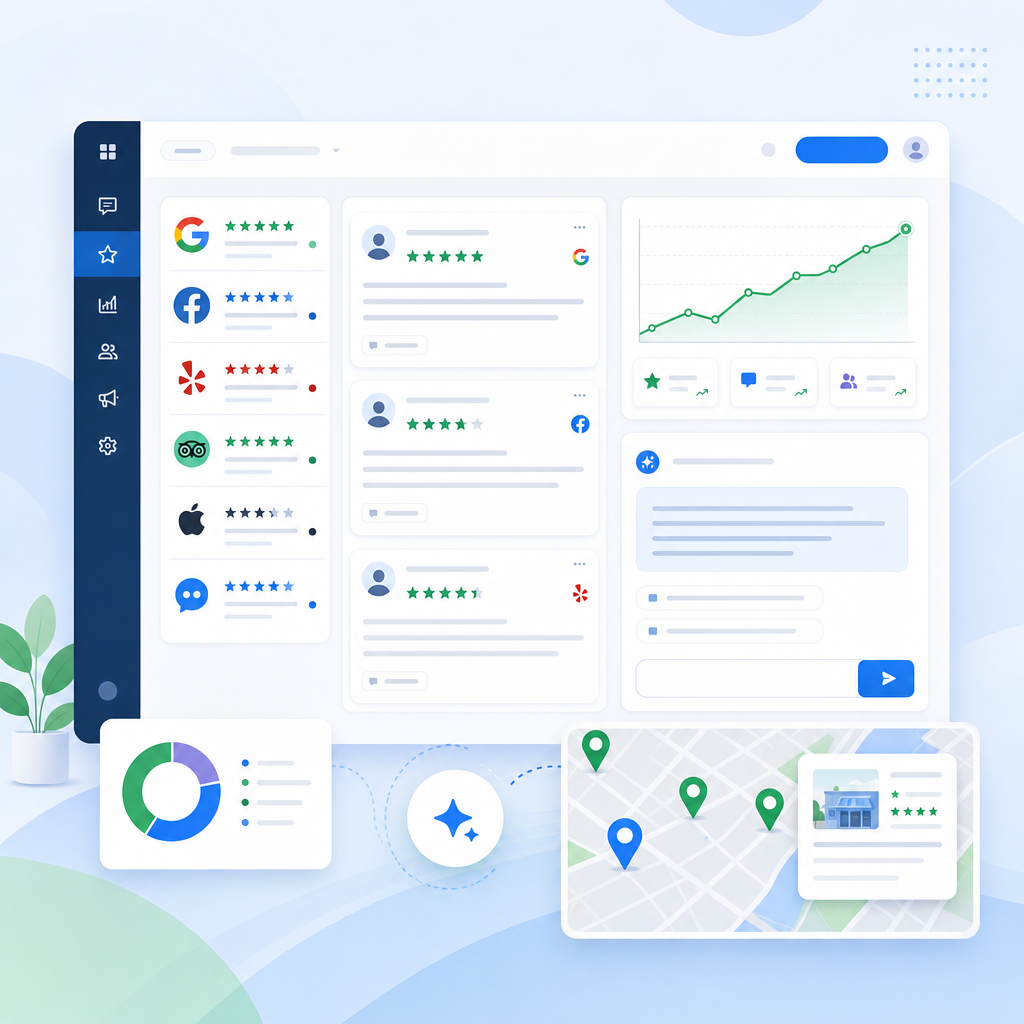
ReviewHive helps make that workflow manageable by aggregating reviews from multiple platforms into one dashboard, tracking rating trends, and drafting AI-assisted replies that your team can edit before publishing. That saves time, but it also gives marketers a clearer view of where reputation issues are forming before they show up as lost calls, fewer bookings, or lower local visibility.
A multi-platform review strategy does not mean treating every site equally. It means knowing where your customers check, keeping those profiles accurate, and responding quickly enough that your public reputation reflects the business you are actually running. If you want one place to monitor reviews, spot rating trends, and respond faster, ReviewHive is built for that day-to-day work.
Sources
- BrightLocal: Google is #1 for local search, but three-quarters use more than one channel
- BrightLocal: Local Consumer Review Survey 2026
- Google: Save time and grow your business with new Gemini tools
- Trustpilot: Trust Report 2025
- Tripadvisor: Tripadvisor's 2025 Transparency Report reveals strong review submissions and improved fraud detection