Review Sentiment Themes: The Local SEO Trend SMBs Should Track in 2026
AI search and review platforms now summarize recurring review themes, so SMBs need to manage reputation beyond star ratings.
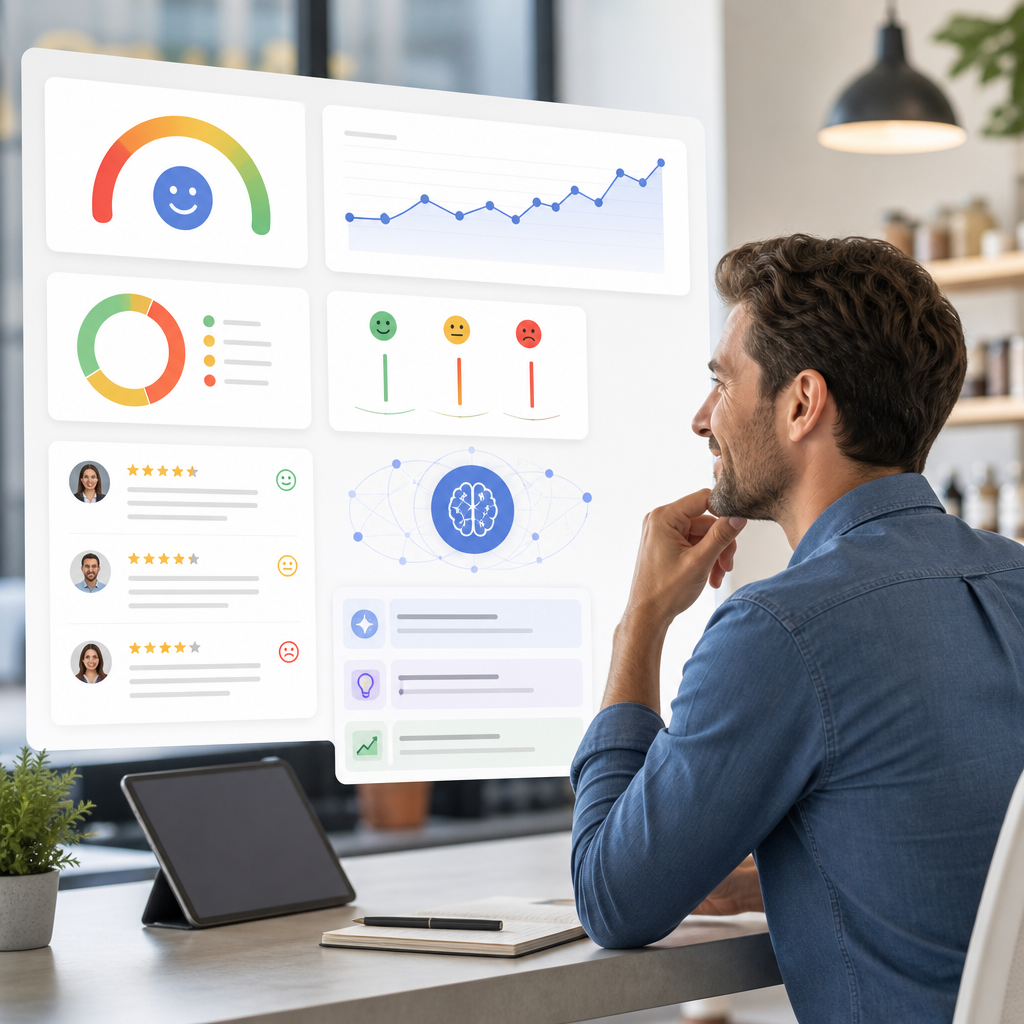
Review Sentiment Themes Are Becoming a Local SEO Asset
Star ratings still matter, but they no longer carry the whole reputation story. In 2026, the faster-moving trend is theme-level reputation: the repeated words, topics, and sentiments that review platforms and AI tools extract from customer feedback.
That shift is visible across Google, Yelp, Trustpilot, and consumer behavior data. Google Maps Platform now documents AI-powered review summaries in the Places API, based solely on user reviews and built to synthesize place attributes and reviewer sentiment. Yelp's 2026 product release says its Assistant is powered by hundreds of millions of reviews, photos, and business details, and can surface user-generated content to validate recommendations. Trustpilot describes AI summaries, topics, and top mentions as ways to organize review feedback into recurring themes.
For SMB owners and local marketers, this changes the daily work of review management. A 4.7 average is useful, but AI systems and hurried customers increasingly want to know what that 4.7 means. Are people praising speed, cleanliness, pricing, staff communication, delivery, bedside manner, job quality, or refunds? Those repeated themes are becoming the words customers see before they read individual reviews.
Why Themes Matter More Than a Single Rating
BrightLocal's 2026 research found that 45% of consumers used AI tools for local business recommendations, up from 6% the prior year. The same report found that 42% of consumers trust AI platforms as much as traditional reviews for local recommendations, and 50% trust AI platforms to accurately summarize reviews from real people.
That does not mean buyers have stopped checking the source. BrightLocal also found that 88% of AI users fact-check reviews cited by AI tools. The practical takeaway is straightforward: AI may start the shortlist, but original reviews still have to support the claim.
This is where sentiment themes become important. If an AI answer says a plumbing company is known for fast emergency service, customers may click through to confirm that pattern. If recent reviews instead mention missed appointment windows, the gap becomes a trust problem. If a restaurant is summarized as friendly but reviewers keep complaining about slow seating, the summary may eventually change.
A business cannot directly control which themes a platform extracts. It can influence the underlying customer experience, the quality and recency of its reviews, and the way it responds when a theme starts to turn negative.
Google and Yelp Are Moving Reviews Into Answers
Google's AI-powered review summaries documentation is a clear signal. Review summaries are available for Place Details, Text Search, and Nearby Search in the newer Places API. Google says the summaries synthesize key review elements, including place attributes and reviewer sentiment, and include attribution back to Google Maps reviews.
That matters for local search because review content is no longer only a destination page. It can become structured material for apps, search experiences, and AI-powered interfaces that help customers decide which place to visit.
Yelp is moving in the same direction from a consumer product angle. In April 2026, Yelp announced that its AI-powered Assistant now works across every category, from restaurants to beauty appointments to home services. Yelp says the Assistant can answer complex local requests and surfaces real user-generated content from first-hand experiences to support recommendations.
For a local service business, that means a review saying "the technician explained the repair clearly and arrived during the promised window" is more useful than a generic five-star note. It gives both human readers and AI systems concrete evidence to classify the business around communication, punctuality, and job quality.
What SMBs Should Track Weekly
Start with a small set of reputation themes that actually affect buying decisions in your category. A dental office might track bedside manner, billing clarity, wait time, appointment availability, and insurance support. A home services company might track punctuality, quote accuracy, cleanup, communication, and job quality. A restaurant might watch service speed, food consistency, noise, value, and reservations.
Then look for changes, not just totals. One complaint about pricing may be noise. Six pricing complaints across Google, Yelp, and Facebook in two weeks is a signal. A steady rise in "rushed" or "hard to reach" language deserves attention before it becomes part of the public summary customers remember.
ReviewHive helps here by aggregating reviews from multiple platforms into one dashboard, then tracking rating trends and analytics across time. That matters because a theme may show up first on one platform and later spread elsewhere. If your Yelp reviews start mentioning long response times while Google is still positive, you have a chance to fix the operation before the issue hits your broader local reputation.
Reply Strategy Now Needs Theme Awareness
Google's Business Profile guidance says review replies are public, should be positive and relevant, and should avoid the same generic response every time. It also recommends timely responses, especially for negative reviews.
Theme-aware replies follow that advice. They acknowledge the specific issue, state what changed, and avoid sounding defensive. If several reviews mention appointment delays, a useful response does not say, "Thanks for your feedback." It says the business adjusted scheduling buffers, added reminder texts, or changed dispatch handoff procedures.
That kind of reply does two jobs. It helps the reviewer feel heard, and it gives future readers evidence that the business is managing the issue. ReviewHive's AI assisted replies can speed up the first draft, but the owner or marketer should still add the operational detail that only the business knows.
Turn Review Themes Into Operations, Not Just Marketing
The biggest mistake is treating sentiment themes as copywriting inputs only. If reviews repeatedly praise "clear estimates," make that a sales script standard. If customers mention "confusing pickup instructions," fix the sign, confirmation email, or front desk handoff. If people love a specific staff behavior, train it.
Trustpilot's AI documentation points in the same direction: its Review Insights categorize topics and sentiment so businesses can see what customers care about and act on the feedback. Its separate AI search research also found that review and trust sites ranked as the second most-cited source category in a study of more than 800,000 AI responses, behind only the general web. Whether the exact platform is Google, Yelp, Trustpilot, Facebook, or a niche marketplace, review content is being read as evidence.
SMBs do not need to chase every AI feature announcement. They do need a disciplined review loop: collect honest reviews, monitor the themes, respond with specifics, and fix the recurring issues. That is now reputation management, local SEO, and customer experience work at the same time.
ReviewHive brings that loop into one place, with multi-platform aggregation, trend analytics, and AI assisted replies that help teams respond faster without losing the human detail that makes a response credible.
Sources
- Google Maps Platform: AI-powered review summaries
- Yelp: Yelp Launches the New Yelp Assistant, Transforming Local Discovery from Search to Answers and Actions
- BrightLocal: Nearly Half of Consumers are Asking AI for Business Recommendations
- Google Business Profile Help: Tips to get more reviews
- Trustpilot Trust Centre: Use of AI
- Trustpilot Business: What is AI saying about your brand?