TikTok GO and Local Reviews: How SMBs Can Prepare for Social Booking
TikTok GO turns local discovery into booking. SMBs should prepare reviews, ratings, and replies before customers tap through.
TikTok GO Puts Local Reviews Closer to the Booking Button
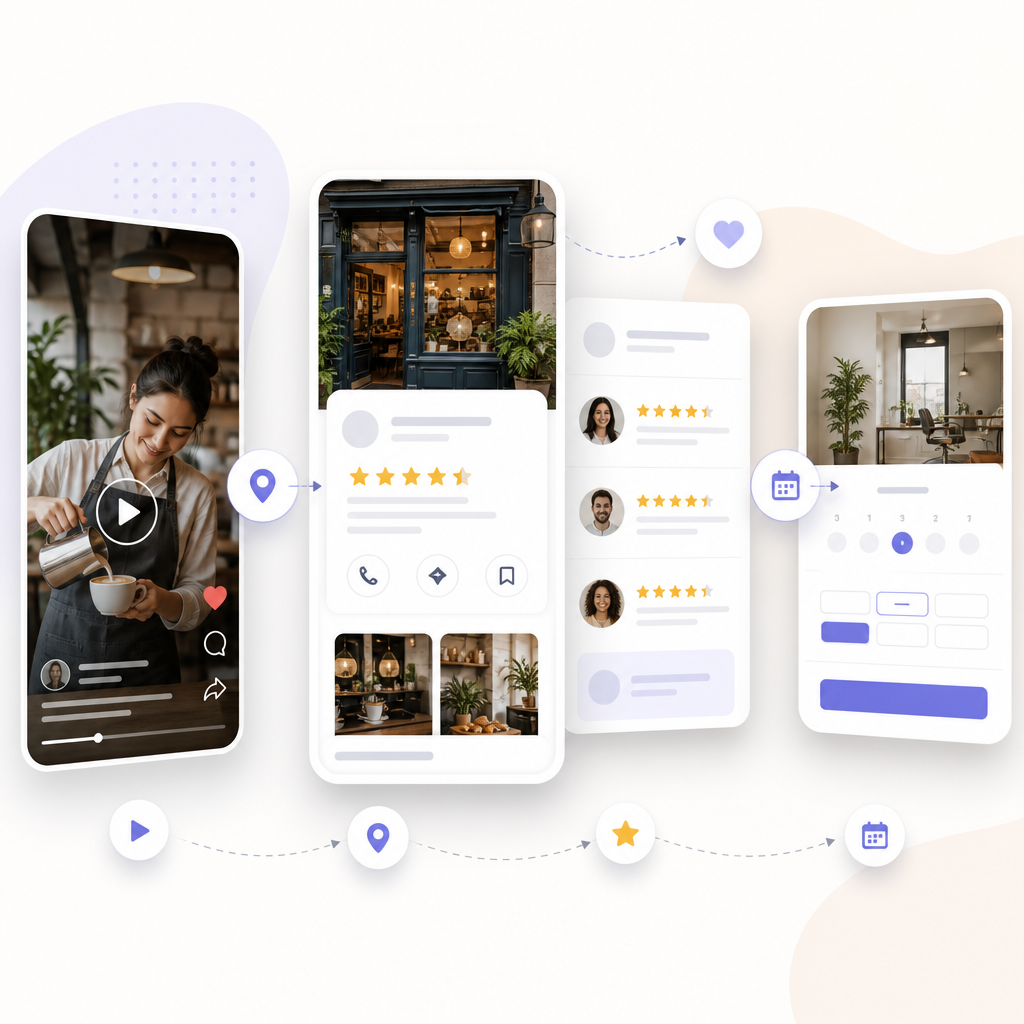
TikTok's May 2026 launch of TikTok GO is worth watching if your business depends on local discovery. The feature lets people in the United States discover and book hotels, attractions, tours, and other local experiences directly inside TikTok. TikTok says the product appears across videos, search, and location pages, with partners including Booking.com, Expedia, Viator, GetYourGuide, Tiqets, and Trip.com.
That doesn't mean every dentist, contractor, salon, or restaurant needs to build its whole marketing plan around TikTok tomorrow. It does mean the distance between a customer seeing social proof and taking action is shrinking. When booking sits next to videos, comments, location pages, and creator recommendations, your review profile has less time to recover from stale ratings, unanswered complaints, or inconsistent details across platforms.
Why This Matters for Reputation Teams
BrightLocal's 2026 Local Consumer Review Survey found that 97% of consumers read reviews for local businesses, and the average consumer uses six review sites when choosing a business. Google is still the leading review source, but BrightLocal reported that Google usage for reviews dropped from 83% in 2025 to 71% in 2026, while video-based and AI-assisted discovery gained attention.
TikTok GO sits right inside that shift. A traveler might see a creator's hotel clip, open the place page, compare signals, and book. A local customer might search for a weekend activity, scan videos and comments, then check Google or Tripadvisor before buying. In both cases, reviews are not a separate research step. They are part of the decision screen.
BrightLocal's data also shows why weak review operations create friction. In 2026, 47% of consumers said they would not use a business with fewer than 20 reviews. Seventy-four percent cared only about reviews written in the last three months. Thirty-one percent said they would only use a business with a 4.5-star rating or higher. For businesses that rely on appointments, tables, bookings, or quote requests, those thresholds can affect whether social interest turns into revenue.
Google Still Sets the Baseline
TikTok may be adding booking paths, but Google Business Profile remains the review foundation for most SMBs. Google's own guidance says local results are based mainly on relevance, distance, and prominence. It also says prominence can include review count and score, and that more reviews and positive ratings can help local ranking.
Google also tells businesses to respond to reviews, noting that replies show customers you value feedback and that positive reviews and helpful replies can help a business stand out. That matters when social discovery sends someone off-platform to verify the business. A strong TikTok video can create interest, but a neglected Google profile can still stop the purchase.
The practical takeaway is simple: treat TikTok GO, TikTok Places, Google Maps, Yelp, Tripadvisor, Facebook, and Apple Maps as connected trust surfaces. Customers don't care which team manages which channel. They see one business.
What To Audit Before Social Booking Expands
Start with the platforms most likely to influence your category. Hotels, tour operators, attractions, restaurants, and destination businesses should pay close attention to TikTok GO, Google, Tripadvisor, Yelp, and Facebook. Service businesses should still monitor TikTok search and local videos, but Google, Yelp, Facebook, and vertical directories may carry more conversion weight.
Check four signals on each platform:
- Rating: Is the score competitive for your category and market?
- Volume: Do you have enough reviews to look credible next to nearby competitors?
- Recency: Have customers reviewed you in the last few weeks, not just last year?
- Response quality: Do replies sound specific, current, and human?
BrightLocal found that 80% of consumers are likely to use a business that responds to all reviews, while generic or templated replies make 50% less likely to choose a business. That is a clear warning for teams using the same reply across every five-star review and every complaint. AI-assisted replies can help, but they need business context, not autopilot.
ReviewHive helps here by aggregating reviews from multiple platforms into one dashboard, tracking rating and sentiment trends, and drafting AI-assisted replies that your team can edit before publishing. That makes it easier to spot a rating dip on one channel, catch repeated complaints before they spread, and keep response speed high without sounding careless.
Use TikTok Search Signals As Customer Language
Search Engine Land's July 2026 analysis described TikTok SEO as broader than hashtags, with discovery influenced by search relevance, spoken topic clarity, captions, location context, creator reviews, comments, and visual signals. The same piece noted TikTok's Local Explorer Program, where users submit location-based reviews and earn experience points, with availability varying by region.
For SMB marketers, the useful move is not chasing every TikTok feature. It is listening to how customers describe your business in public. If people keep saying best rooftop brunch in Austin, quiet facial studio near Union Square, or kid-friendly cave tour, those phrases can inform your Google services, website FAQs, review request prompts, and response language.
Do this monthly. Search TikTok for your business name, neighborhood, category, and common local-intent phrases. Save recurring praise and complaints. Compare them with Google and Yelp review themes. If social videos praise your atmosphere but Google reviews complain about wait times, that gap tells you exactly where to improve operations and messaging.
Build a Review System That Can Handle Faster Decisions
The businesses best positioned for TikTok GO are not necessarily the ones with the most followers. They are the ones with current, consistent proof wherever customers check before booking.
Ask recent customers for honest reviews on the platforms that matter most for your category. Respond quickly and specifically. Keep business details, booking links, hours, photos, and service descriptions accurate. Watch social search for new language and expectations. When a negative review identifies a real issue, fix the issue before writing the reply.
Social booking will keep changing, but the reputation work underneath is steady: earn trust, show recent proof, and make the next step easy. ReviewHive can help your team keep that system organized across review sites, analytics, and AI-assisted responses, so social discovery has a better chance of becoming a customer.
Sources
- TikTok Newsroom: Introducing TikTok GO: A new way to discover and book experiences on TikTok
- BrightLocal: Local Consumer Review Survey 2026: Star Ratings Keep Rising, Old Reviews Don't Cut It
- Google Business Profile Help: Tips to improve your local ranking on Google
- Search Engine Land: Why TikTok deserves a place in your SEO strategy