Video Reviews and Local SEO: What SMBs Should Track in 2026
Video reviews are moving into local discovery. Here is what SMBs should monitor across Google, Yelp, TikTok, and review dashboards.
Video Reviews and Local SEO: What SMBs Should Track in 2026
Customer reviews are becoming more visual, and that matters for local SEO. Text reviews still carry the detail, star ratings still shape trust, and business replies still signal attentiveness. But consumers are also checking short videos, photos, TikTok searches, Instagram posts, YouTube clips, and AI-assisted local recommendations before they choose a business.
BrightLocal's 2026 Local Consumer Review Survey found that 97% of consumers read reviews for local businesses, and the average consumer now uses six different review sites when choosing a business. Google is still the largest review source, but BrightLocal reports that its usage fell from 83% in 2025 to 71% in 2026, while video-based platforms such as YouTube, Instagram, and TikTok gained traction.
For SMB owners and marketers, the practical takeaway is not to chase every platform equally. It is to treat visual proof as part of reputation management, then monitor whether the same themes appear across reviews, replies, photos, and videos.
Why Video Is Becoming Part of Review Research
Video gives buyers evidence that a text review cannot always provide. A restaurant guest can show portion size, noise level, seating, and wait time. A salon client can show the finished result. A contractor's customer can show clean job-site behavior and the final work. These details help people answer the quiet question behind most local searches: will this business deliver the experience I expect?
BrightLocal's survey supports that shift. It found that 36% of consumers consider an appealing photograph or video of the product or service accompanying a review when deciding which business to use. That does not make video more important than sentiment, recency, rating, or owner responses. It does mean visual evidence has moved into the decision set.
Search behavior is also spreading beyond the usual review sites. Search Engine Journal reported on Adobe Express survey data from early 2026 showing that 49% of U.S. consumers have used TikTok as a search engine, up from 41% in Adobe's 2024 data. The same report said Google remains the most helpful platform for search at 85%, followed by Reddit, ChatGPT, YouTube, and TikTok. So TikTok is not replacing Google for most consumers, but it is now part of the research path.
SOCi's Consumer Behavior Index commentary points in the same direction for younger consumers. SOCi reported that Gen Z consumers regularly use an average of 3.6 apps to find and choose a single local business. That multi-platform journey is exactly where review consistency becomes valuable.
Google and Yelp Are Making Visual Proof Easier to Surface
Google Business Profile already supports videos directly on verified profiles. Google's documentation says businesses can add photos and videos of storefronts, products, and services, with videos up to 30 seconds long, up to 75 MB, and 720p or higher. Google also notes that new media appears first on the Business Profile once approved, which makes recent visual content especially useful for businesses that have seasonal inventory, changing interiors, new staff, or updated services.
Yelp is also moving toward more visual local discovery. In Yelp's Q1 2026 shareholder letter filed with the SEC, the company said its updated review submission flow enables users to post high-resolution videos. Yelp also said its expanded Yelp Assistant surfaces relevant user reviews, star ratings, photos, and other details when giving local recommendations across business categories.
Those product moves matter because platforms are not just storing reviews anymore. They are summarizing, filtering, ranking, and repackaging customer content into faster decision experiences. A business with recent, consistent, visual proof gives those systems more useful material to work with.
What to Monitor Beyond Star Rating
Start with the basics, then add visual checks. Your star rating still matters, but it is no longer enough to review the average once a month.
Track whether customers mention the same strengths across platforms. If Google reviews praise speed, Yelp reviews praise staff, and TikTok comments complain about wait times, you have a positioning problem to investigate. The goal is not perfect uniformity. The goal is to catch conflicting signals before they show up in search snippets, AI summaries, or social recommendations.
Watch review recency by platform. BrightLocal found that 74% of consumers care only about reviews written in the last three months, and 44% consider whether a review was posted within the last month. A business with a strong rating but stale reviews can look inactive, especially beside competitors with fresh photos, recent customer clips, and current replies.
Review visual content for accuracy. Google says photos and videos should represent reality and avoid excessive filters. That is good guidance beyond Google. If customer videos show outdated signage, messy displays, old menus, or finished work that no longer matches your standard, respond where appropriate and update your own media.
Measure response coverage. BrightLocal found that 89% of consumers expect business owners to respond to reviews, 81% expect a response within a week, and 19% expect a same-day response. Visual reviews and social posts may not always have the same reply workflow as Google or Yelp reviews, but the expectation is similar: customers notice whether the business is present.
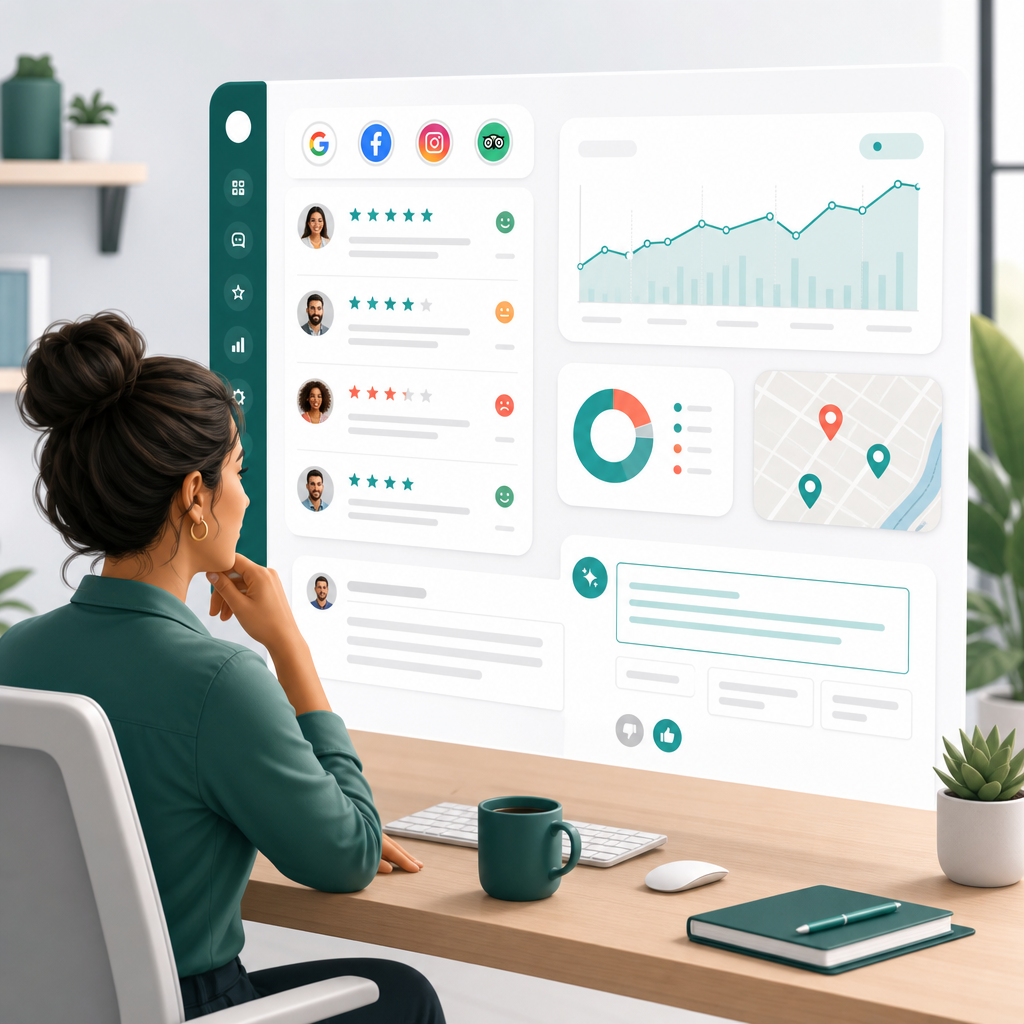
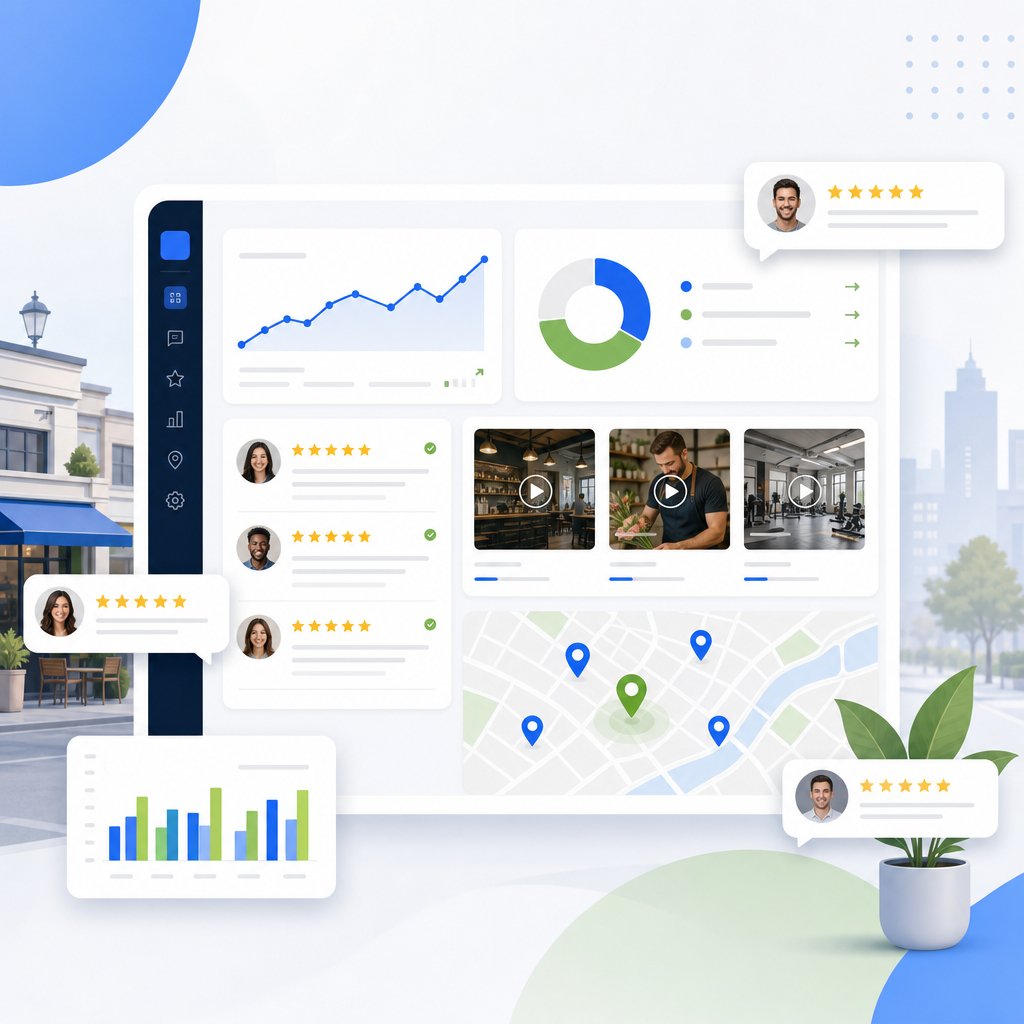
ReviewHive helps here by bringing reviews from multiple platforms into one dashboard, tracking rating and sentiment trends, and helping draft AI-assisted replies that still sound specific to the customer. That matters when visual and text feedback are spread across Google, Yelp, Facebook, and other channels.
A Practical Workflow for SMB Teams
Set a weekly review check for the platforms that affect your buyers most. For many local businesses, that means Google first, then Yelp, Facebook, Tripadvisor, Trustpilot, or industry-specific sites, plus any social platform where customers already post about you.
Add a monthly visual audit. Look at your Google Business Profile photos and videos, customer-uploaded media, Yelp media, and social search results for your business name. Save examples of strong customer proof, note recurring complaints, and flag anything that is inaccurate or outdated.
Ask for honest reviews after real service moments, not scripted praise. If customers want to include a photo or short video, make it easy, but do not pressure them or offer rewards for positive feedback. The most useful visual reviews are specific and natural.
Close the loop with operations. If videos repeatedly show long lines, unclear pickup instructions, poor lighting, or inconsistent finished work, do not treat that as only a marketing issue. The best review strategy is still a better customer experience.
Video reviews are not a separate channel from reputation management. They are another way customers document trust. ReviewHive can help your team track that trust across platforms, spot trend changes early, and respond faster without losing the human tone customers expect.
Sources
- BrightLocal: Local Consumer Review Survey 2026
- Google Business Profile Help: Manage your Business Profile photos & videos
- Search Engine Journal: Gen Z Preference For TikTok Over Google Drops 50%, Data Shows
- SOCi: Why We Created the Consumer Behavior Index at SOCi: Navigating the Fragmented Future of Local Discovery
- SEC: Yelp Q1 2026 Letter to Shareholders