Yelp AI Review Insights: How SMBs Should Manage Review Sentiment in 2026
Yelp is turning review text into AI topic scores. Here is how SMBs can adapt review requests, replies, and sentiment tracking.

Yelp AI Review Insights Are Turning Review Text Into Search Signals
Yelp reviews are no longer just a star rating, a date, and a few paragraphs that customers may or may not read. Yelp is increasingly using AI to turn review content into structured signals: topic scores, business page answers, review snippets, popular offerings, and eventually more visibility inside AI assistants outside Yelp.
For SMB owners and local marketers, that changes the job. A five-star average still matters, but the words inside reviews now matter more. If customers praise your repair quality but repeatedly mention confusing pricing, slow front desk service, or long wait times, those themes can become visible faster than a human prospect would have found them.
What Changed On Yelp
Yelp introduced AI-powered Review Insights in December 2024 for restaurant, food, and nightlife businesses on iOS. The feature uses large language models to analyze review sentiment around topics such as food quality, service, and ambiance, then displays aggregated sentiment scores for each topic.
The bigger shift came with Yelp's 2025 Fall Product Release. Yelp said Review Insights was expanding to services categories on iOS business pages, with AI analyzing reviewer sentiment for areas such as customer experience, pricing, facilities, and job quality. That matters for home services, auto shops, beauty businesses, health-adjacent services, and other local categories where customers often choose based on very specific concerns.
Yelp is also using AI in related discovery surfaces. Its 2025 release said Yelp Assistant would answer consumer questions directly on eligible business pages using reviews, photos, business page information, and the business's website. Yelp also announced Popular Offerings for more than 100 categories, pairing review mentions with photos to surface frequently discussed services or experiences.
The practical takeaway: review content is becoming machine-readable merchandising copy. Your customers are writing the raw material that Yelp's AI may use to describe your business.
Why This Is Bigger Than Yelp Alone
BrightLocal's Local Consumer Review Survey 2026 found that 97% of consumers read reviews for local businesses, and 41% always read reviews when browsing for a business, up from 29% in 2025. The same survey reported that consumers use an average of six review sites when choosing businesses.
AI is now part of that process. BrightLocal reported that use of ChatGPT and other generative AI tools for local recommendations rose from 6% in 2025 to 45% in 2026, making AI tools the third most used source for local business recommendations behind Google and Facebook. In a separate BrightLocal analysis of AI users, 97% said they sometimes double-check AI recommendations against real reviews, and 42% said they always check native review platforms.
That means AI discovery and review-platform trust are converging. A customer might ask ChatGPT for a dog-friendly coffee shop, see a short recommendation, then open Yelp or Google to confirm the details. Or they might start on Yelp, use AI-generated topic filters, then click through to your website before booking.
Axios reported in July 2026 that Yelp is licensing reviews, photos, and business information to OpenAI, with ChatGPT expected to surface Yelp reviews, ratings, photos, and other business details in responses. For SMBs, that makes Yelp review quality relevant even when the search begins outside Yelp.
Topic Sentiment Is Now A Reputation Metric
Most businesses still monitor reviews like this: average rating, review count, new negative reviews, response status. That is necessary, but it misses the direction platforms are moving.
A local HVAC company with a 4.7 rating may have a strong overall reputation, but if recent reviews repeatedly mention unclear estimates, missed arrival windows, or messy cleanup, AI topic summaries can expose those patterns. A salon may have glowing reviews overall, while a small cluster of comments about appointment delays affects how consumers judge service. A restaurant may have a strong food score and a weaker wait-time theme, which tells a very different story than its average rating alone.
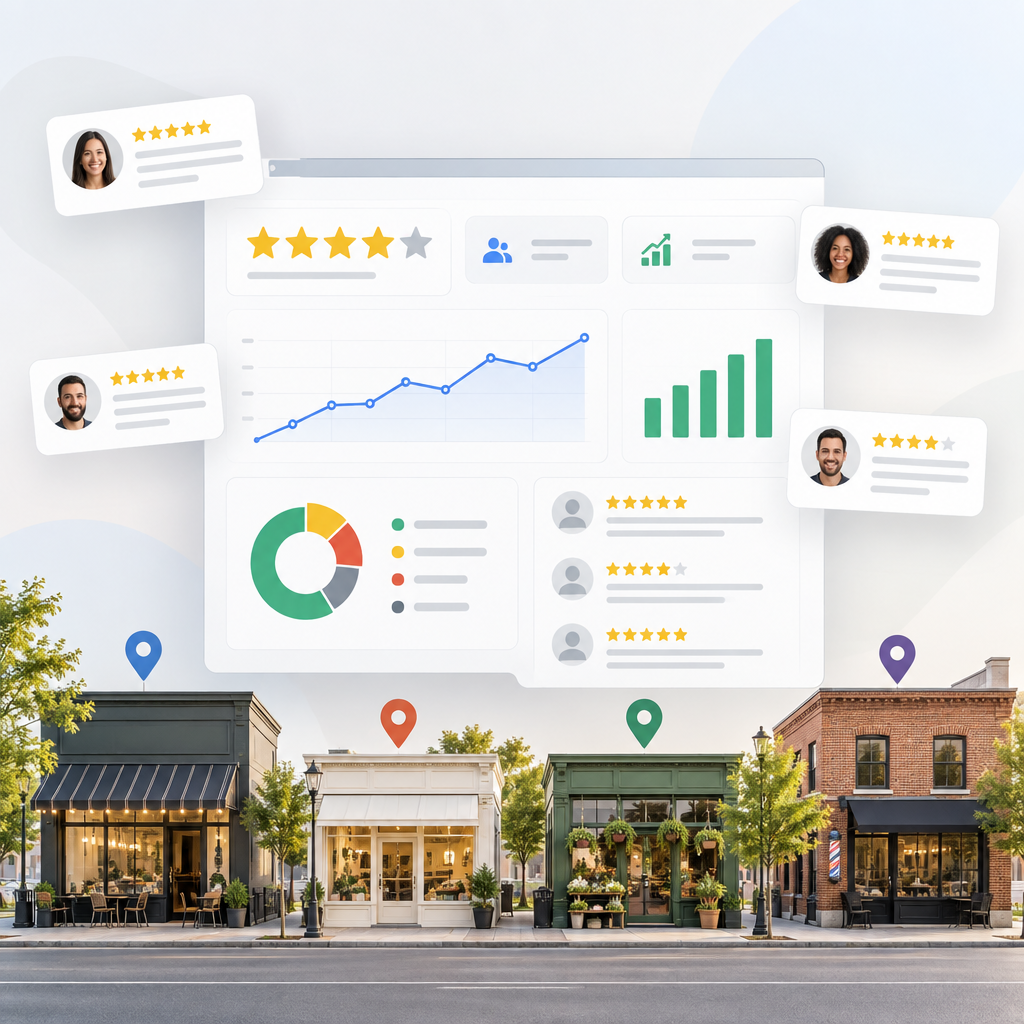
This is where ReviewHive fits naturally into the workflow. By aggregating reviews across platforms, tracking rating and sentiment trends, and helping teams draft timely replies, ReviewHive gives owners a way to spot recurring themes before they become the phrase customers keep seeing in AI summaries.
What SMBs Should Do Now
Start by auditing the last 90 days of reviews by topic, not just rating. Create a short list of themes that matter in your category: price clarity, staff communication, wait time, cleanliness, quality of work, atmosphere, follow-through, delivery accuracy, bedside manner, or warranty support. The right list depends on what customers hire you to do.
Next, compare platforms. Yelp may show one set of concerns, while Google, Facebook, Tripadvisor, or industry-specific sites show another. BrightLocal's finding that consumers use an average of six review sites is a useful reminder: your reputation is distributed, even if your team mostly watches one profile.
Then tighten the customer handoff after service. Do not script customers or ask for specific wording. Do ask for honest feedback soon after the experience, while details are fresh. A simple prompt like, "What stood out about your visit or project?" can encourage more useful, specific reviews without steering the content.
Respond with the future reader in mind. If a review praises your emergency plumbing response, mention the specific service and neighborhood naturally. If someone complains about pricing confusion, explain the fix clearly and avoid defensive language. Review replies are not only for the original reviewer. They help the next customer understand whether your business pays attention.
Finally, take repeated themes back into operations. If five reviews in a month mention long check-in waits, that is not a marketing issue. It is a process issue showing up in public. Treat review sentiment as a lightweight customer research program, because that is increasingly how platforms treat it.
Watch Authenticity Carefully
Yelp's 2025 Trust & Safety Report shows why shortcuts are risky. Yelp said its automated systems filtered out nearly 500,000 suspected AI-generated reviews in 2025. It also reported about 22 million reviews contributed that year, with around 70% recommended by its automated recommendation software, 17% not recommended, 11% removed by Yelp's User Operations team, and 2% self-removed by reviewers.
The lesson is plain: do not use AI to write customer reviews, do not offer incentives for review content, and do not run campaigns that create suspicious bursts of similar language. Use AI where it belongs, inside your business workflow: summarizing themes, routing issues, and drafting owner replies that a real person reviews before posting.
The Review Strategy For 2026
The best response to Yelp AI Review Insights is not to chase the algorithm. It is to make your real customer experience easier for both people and machines to understand.
Earn specific reviews. Monitor topic sentiment. Reply quickly. Fix repeated complaints. Keep your Yelp, Google, and other profiles accurate. When AI systems summarize your reputation, they should have a deep pool of current, firsthand customer language to work from.
ReviewHive can help by bringing multi-platform reviews, trend analytics, and AI-assisted reply drafts into one dashboard, so your team can spend less time checking tabs and more time improving the moments customers actually write about.
Sources
- Yelp: Yelp Unveils a Series of New AI-powered Features to Enhance Discovery and Connection with Local Businesses
- Yelp: Yelp Expands AI Features to Make Local Discovery More Conversational, Visual and Seamless
- Yelp: Yelp Releases 2025 Trust & Safety Report
- BrightLocal: Local Consumer Review Survey 2026
- BrightLocal: Half of consumers are asking AI for business recommendations
- Axios: Yelp partners with OpenAI to surface reviews in ChatGPT