Yelp Response Quality Badges: Why Review Replies Now Affect Local Trust
Yelp now uses AI to grade response quality. Here is how SMBs can write faster, more specific review replies across every platform.
Yelp Response Quality Badges: Why Review Replies Now Affect Local Trust
Yelp has made review response quality visible in a new way. In its April 2025 Spring Product Release, Yelp introduced AI-powered response quality badges for service pros, using large language models to identify businesses that consistently send helpful, informative replies to project requests. By October 2025, Yelp said the badges were rolling out nationwide, with business owners receiving real-time AI guidance to improve replies.
For local businesses, that matters because review management is moving from a private support workflow to a public trust signal. Customers already judge the star rating and the review text. Now, on Yelp, they may also see whether a business communicates clearly before they ever request a quote.
What Yelp Is Actually Grading
Yelp’s badge criteria are practical, not mysterious. The company says its LLMs look at whether the business provides a quote or availability, acknowledges the project details, asks relevant follow-up questions, and goes beyond a generic “call me” reply.
That list is useful even outside Yelp. A strong review or lead response should prove that a real person understood the customer. A weak one sounds interchangeable:
“Please call us to discuss.”
A better version gives the customer a next step and shows attention:
“Thanks for the note, Maria. We can usually inspect a leaking water heater within 24 hours. If you can send the model number and a photo of the base, we’ll confirm whether repair or replacement is more likely before we book the visit.”
The second reply does more than answer. It reduces uncertainty, sets expectations, and gives the next customer evidence that the business is organized.
Consumers Notice Silence And Templates
BrightLocal’s 2026 Local Consumer Review Survey shows why this shift is bigger than a Yelp feature. In a representative panel of 1,002 US adults, 97% of consumers said they read reviews for local businesses, and 41% said they always read reviews when browsing for businesses.
The response data is even more direct. BrightLocal found that 80% of consumers are likely to use a business that responds to every review, while 42% are unlikely to use one that ignores reviews entirely. It also found that 89% of consumers expect business owners to respond to reviews, 19% expect a same-day reply, and 81% expect a response within a week.
Speed alone is not enough. Half of consumers said templated or generic responses make them unlikely to choose a business. That is the operational problem for most SMBs: replying to every review takes time, but copy-paste replies can backfire.
Google Still Wants Public, Helpful Replies
Google’s Business Profile help documentation is consistent with the same standard. Google says replies show publicly as the business, reviewers get notified when a business replies, and customers appreciate real, helpful responses. Its guidance also tells businesses to stay professional, keep replies short, avoid sales pitches, investigate negative experiences, apologize when needed, and respond in a timely manner.
That makes review replies part of the sales path. A potential customer reading a negative review is also reading how the owner handled pressure. A calm, specific response can contain the damage. A defensive response can make the review look worse.
The best replies usually do four things:
- Acknowledge the specific experience.
- Correct facts without arguing.
- Explain the next step.
- Move private details to phone or email.
For example, a dental office should not discuss treatment details in a public Google reply. A contractor should not post a customer’s address. A restaurant should not accuse the reviewer of lying. The public reply is for accountability, not a full case file.
AI Can Help, But Authenticity Rules Still Apply
AI-assisted replies are useful when they speed up the first draft, especially for multi-location businesses or busy service teams. The risk is using AI as a paste button instead of an editor.
Review platforms and regulators are drawing a hard line around fake or manipulated reviews. Yelp’s 2025 Trust and Safety Report says it filtered nearly 500,000 suspected AI-generated reviews in 2025. The FTC’s final rule on fake reviews and testimonials bans fake or false consumer reviews, buying positive or negative reviews, and certain insider reviews that fail to disclose a material connection.
That doesn’t mean businesses should avoid AI for owner replies. It means the human facts need to stay in charge. Use AI to draft a polite structure, then add the actual job type, location, appointment timing, staff initials, policy detail, or resolution path. Never use AI to invent what happened.
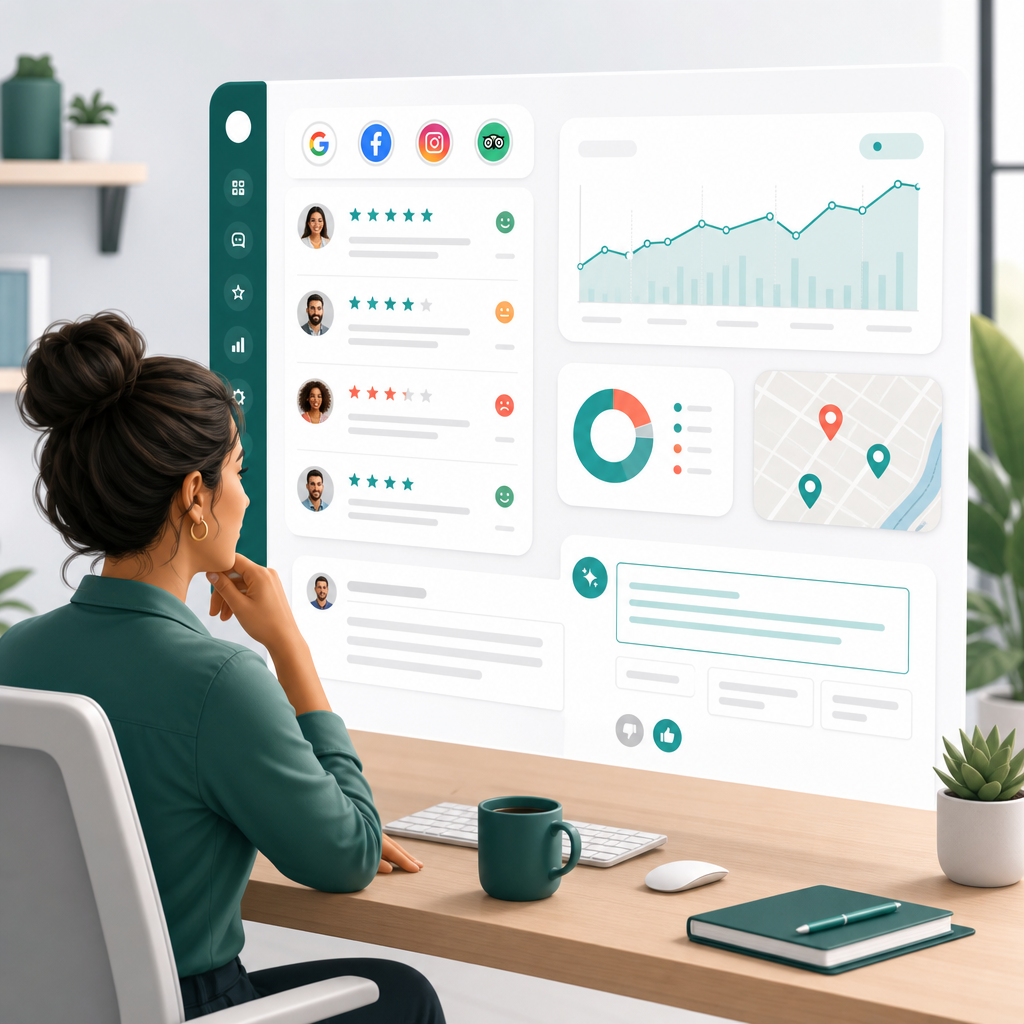
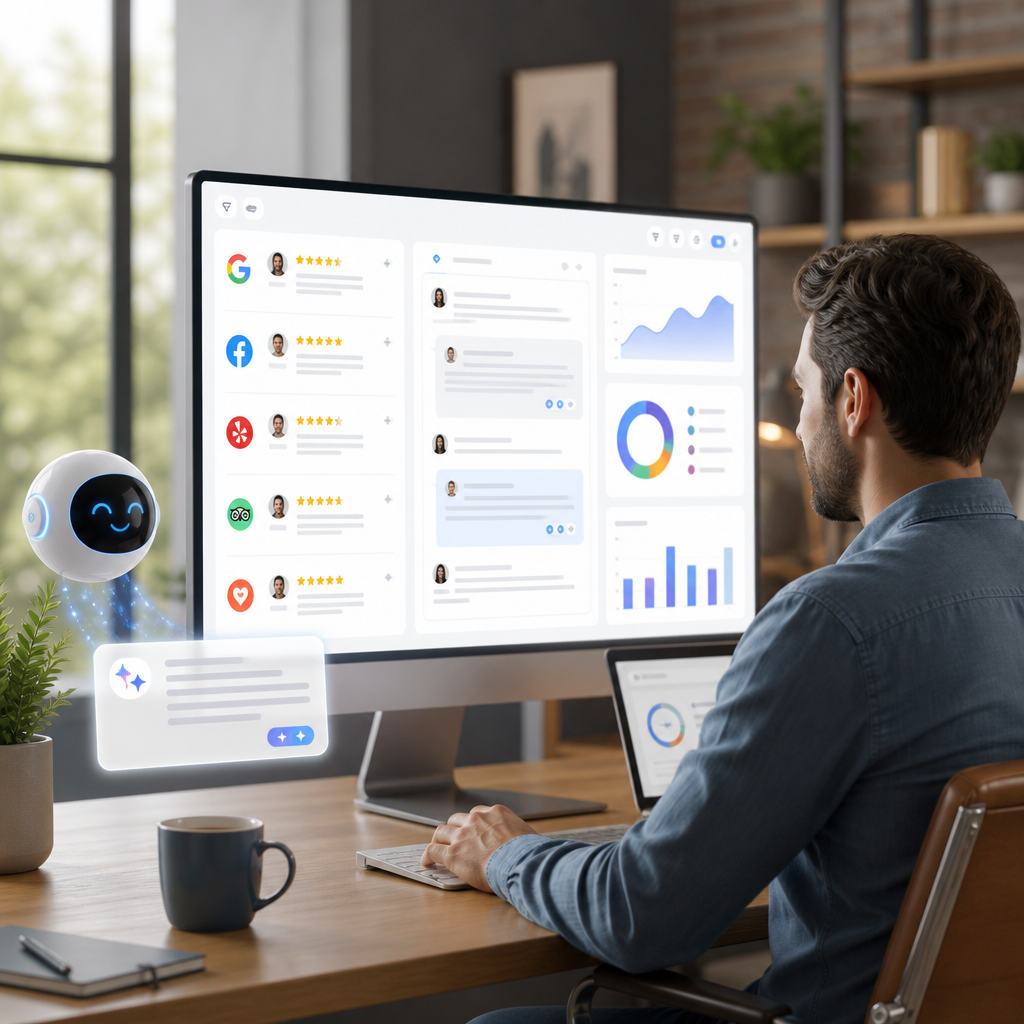
ReviewHive fits well into this workflow because it brings reviews from multiple platforms into one dashboard, tracks rating and sentiment trends, and drafts AI-assisted replies that teams can edit before publishing. That gives businesses speed without losing the specificity that Yelp, Google, and customers are rewarding.
A Practical Reply Workflow For SMBs
Start by triaging new reviews once or twice per day. Same-day is ideal for serious complaints, but BrightLocal’s data suggests a one-week ceiling for most customers. Don’t let weekends or platform silos hide urgent reviews.
Next, tag reviews by theme: pricing, wait time, staff attitude, product quality, scheduling, cleanliness, or outcome. Patterns matter. If three reviews mention missed calls, the fix may be staffing or phone routing, not a better apology.
Then write from a simple framework:
Positive review: thank the customer, mention the specific service or product, and invite them back without sounding promotional.
Neutral review: thank them, address the mixed point, and explain what you’ll improve.
Negative review: acknowledge the issue, avoid private details, state what you can check or change, and give a direct support path.
Finally, measure response quality alongside rating trends. Track the percentage of reviews answered, average response time, recurring complaint themes, and whether negative themes decline after operational fixes. Reputation work should change the business, not just the dashboard.
The Takeaway
Yelp’s response quality badges point to a broader local search trend: platforms are getting better at turning business behavior into visible trust signals. Reviews are no longer just a pile of customer opinions. They are training data for summaries, badges, local recommendations, and buyer confidence.
Businesses that respond quickly, specifically, and honestly will look better wherever customers compare options. ReviewHive helps teams monitor those reviews, spot patterns, and draft better replies from one place, so reputation management becomes a daily operating habit instead of a scramble after a bad review.
Sources
- Yelp: Yelp Introduces New AI-powered Features to Streamline Hiring Service Pros and Enhance the Dining Experience
- Business Wire: Yelp Expands AI Features to Make Local Discovery More Conversational, Visual and Seamless
- BrightLocal: Local Consumer Review Survey 2026: Star Ratings Keep Rising, Old Reviews Do Not Cut It
- Google Business Profile Help: Manage customer reviews
- FTC: Federal Trade Commission Announces Final Rule Banning Fake Reviews and Testimonials
- FTC: The Consumer Reviews and Testimonials Rule: Questions and Answers